
In Costa Rica, coffee is more than just a drink — it's a way of life. From its historic role in shaping the nation's economy to the daily rituals still observed in homes and mountain-side fincas, coffee holds a place in Costa Rican identity that no other crop or custom can match. To truly understand Costa Rica is to understand its coffee culture: a 200-year story of history, tradition, and community that continues to unfold in every cup.
What Is Costa Rica's Coffee History?
Costa Rica has one of the oldest and most consequential coffee histories in the Americas. Coffee first arrived in Costa Rica in the late 1700s, believed to have been brought from Cuba during the colonial era. Early farmers quickly recognized what the land already seemed to know: the volcanic soils, high-altitude mountain ridges, and consistent rainfall patterns of the Central Valley were near-perfect conditions for growing exceptional coffee.
By the mid-1800s, coffee had become Costa Rica's dominant export crop — so central to the national economy that it earned the nickname el grano de oro, the golden bean. Profits from coffee exports funded much of the country's early infrastructure, including railroads connecting the interior highlands to Caribbean ports, and the ornate Teatro Nacional in San José, built in 1897 and still considered one of the most beautiful theatres in Latin America.
Costa Rica was also the first country in Central America to develop a coffee industry on a large commercial scale, and the government actively encouraged its expansion through land grants and trade incentives in the 1830s. This forward-thinking approach to agricultural development set the stage for more than two centuries of coffee cultivation expertise — a legacy that modern Costa Rican growers continue to build on today.
What Makes Costa Rica's Coffee Growing Regions Unique?
Costa Rica is home to eight distinct coffee growing regions, each producing beans with unique flavor profiles shaped by elevation, soil composition, and microclimate.
The country's geography creates an almost implausible range of growing conditions within a relatively compact area:
- Central Valley – The historic heartland of Costa Rican coffee. Volcanic soils from Poás and Irazú volcanoes yield balanced, bright coffees with mild acidity and clean sweetness.
- Tarrazú – Widely regarded as Costa Rica's most prestigious region. High elevations (1,200–1,900 meters) and cool temperatures produce coffees with exceptional clarity, citrus brightness, and complex floral notes.
- West Valley (Valle Occidental) – Known for fruit-forward, honey-processed beans with stone fruit and caramel characteristics.
- Brunca – A southern region that benefits from the rich soils of the Chirripó highlands, producing full-bodied coffees with earthy depth.
- Turrialba – Lower elevation growing at the base of Turrialba volcano, producing mild, approachable coffees often used in blending.
- Orosi – Nestled in a lush river valley east of Cartago, Orosi produces coffees known for their gentle sweetness and medium body.
- Tres Ríos – A small but storied region near San José with volcanic basalt soils producing refined, wine-like coffees.
- Guanacaste – The newest recognized region, producing coffees influenced by the drier Pacific climate of Costa Rica's northwestern coast.
Each of these regions reflects the country's remarkable biodiversity — and each cup of Costa Rican coffee carries the specific character of the land and elevation where it was grown.
What Is a Chorreador and How Does It Work?
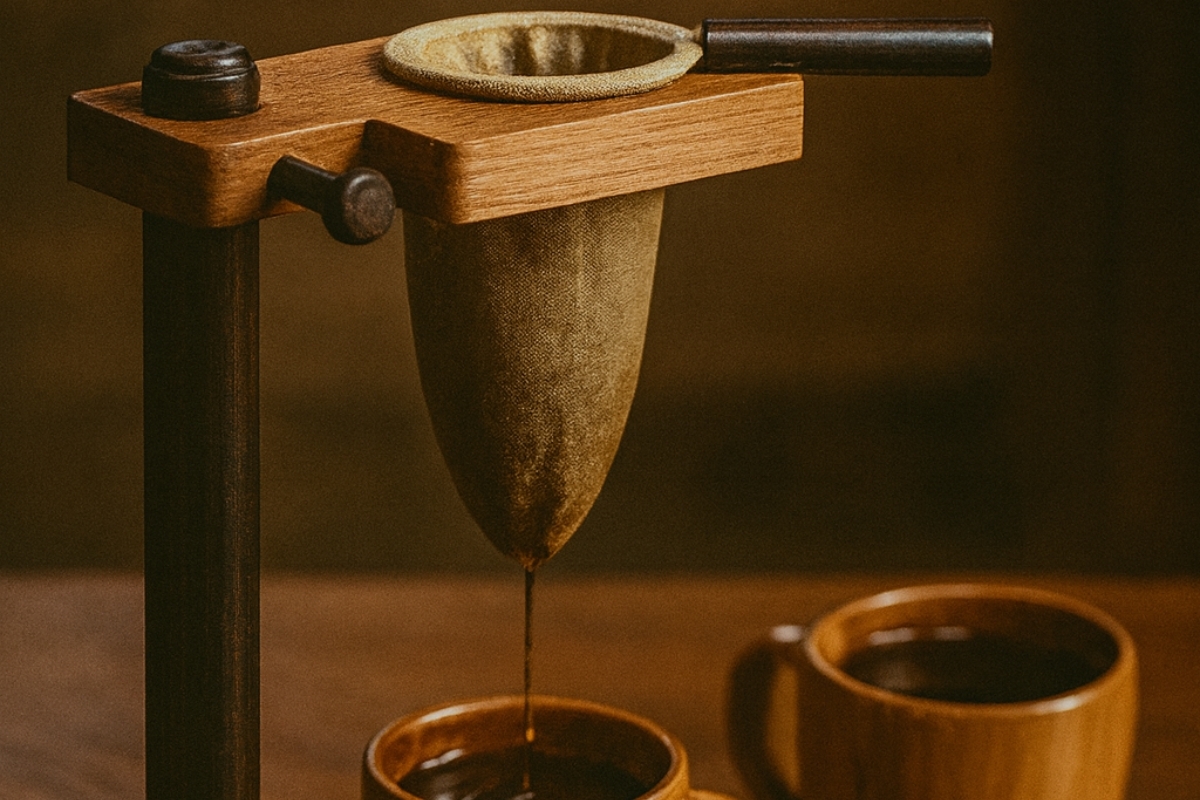
A chorreador is Costa Rica's traditional coffee brewing device — a hand-crafted wooden stand holding a cloth filter bag called a bolsita — and it has been the preferred brewing method in Costa Rican homes for generations.
The chorreador is elegantly simple. Hot water is poured slowly by hand over freshly ground coffee held in the bolsita, and the brewed coffee drips directly into a cup or jarra (pitcher) placed below. There are no moving parts, no electricity required, no paper waste. Just water, heat, coffee, and patience.
The result is a smooth, clean, aromatic cup that showcases the natural sweetness and brightness of Costa Rican coffee without over-extracting bitterness. Because the cloth filter allows more natural oils through than a paper filter — but provides more filtration than a French press — the flavor profile lands somewhere beautifully in between: clean but rich, bright but full.
Many Costa Rican families have had the same chorreador for decades, passed down through generations as both a functional tool and a cultural keepsake. Visitors to Costa Rica often take a chorreador home as their most meaningful souvenir — not just because it makes excellent coffee, but because it carries the memory of the place and the people.
Making coffee with a chorreador is a tactile, mindful act. It slows you down, demands your attention, and rewards you with something better than most machines can produce. In a world increasingly oriented toward speed and automation, the chorreador is a quiet act of resistance — and a reminder that the best things take a little time.
What Is La Hora del Café in Costa Rica?
La hora del café — the coffee hour — is a daily afternoon ritual observed across Costa Rica, typically around 3 to 4 p.m., in which families, coworkers, neighbors, and friends pause their day to share coffee and a light snack together.
This isn't a coffee break in the corporate sense. La hora del café is a genuine cultural institution — a daily pause built into the rhythm of Costa Rican life that prioritizes human connection over productivity. It's a time to talk, to laugh, to catch up on the day, to simply be present with people you care about.
The coffee itself is typically brewed strong and served black or with a little sugar, though café con leche (coffee with warm milk) is popular in the afternoon, especially with children and older generations. The accompanying snacks vary by household and region but often include:
- Pan dulce – Sweet bread rolls, sometimes filled with guava or cream cheese
- Empanadas – Savory or sweet turnovers, often with potato, black bean, or fruit filling
- Tamales – Especially during the Christmas season, when tamale-making becomes a family event unto itself
- Chorreadas – Corn pancakes, a traditional Costa Rican comfort food
- Galletas – Simple butter cookies or crackers paired with the afternoon cup
More than the food, la hora del café is about the ritual of stopping. Costa Rica's pura vida philosophy — the idea that life is good and worth savoring — finds one of its clearest expressions in this afternoon pause. Productivity can wait. The coffee is ready, the family is here, and the day has been long enough.
How Is Coffee Part of Costa Rican Daily and Ceremonial Life?
In Costa Rica, coffee is present at nearly every significant moment of daily life — from the morning's first greeting to holiday gatherings — and offering coffee to a guest is one of the most fundamental expressions of hospitality in the culture.
Morning coffee in Costa Rica is almost universally the first act of the day. Homes wake to the smell of brewing coffee, and sitting down with a cup before facing the day is considered as essential as any other morning ritual. Children are often introduced to café con leche early in childhood, gradually shifting toward stronger preparations as they grow.
Coffee is also a social currency. Arriving at someone's home without being offered coffee would feel incomplete — almost unwelcoming. The act of brewing and serving coffee to a visitor communicates warmth, respect, and the intention to be present with that person. It's not transactional. It's relational.
During Costa Rica's major holidays — Semana Santa (Holy Week), the Independence Day celebrations in September, and the Christmas season from December through Epiphany — coffee plays a central role in family gatherings. Christmas tamale season, in particular, is inseparable from coffee: the hours-long process of preparing, filling, wrapping, and steaming tamales happens alongside endless rounds of coffee and storytelling.
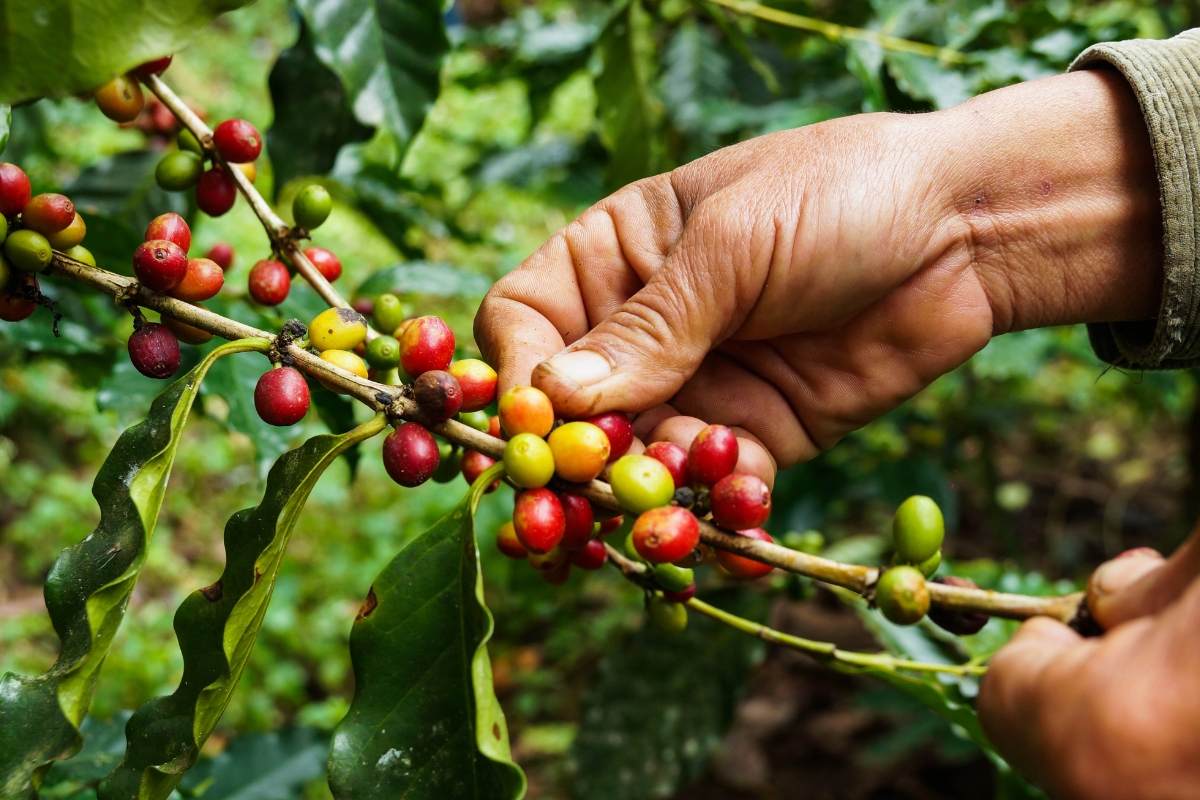
In rural coffee-farming communities, the harvest season (typically October through February, varying by region) brings neighbors together to help with the cosecha — the picking. Coffee harvesting is communal work, and coffee itself is what fuels it. Workers break for coffee between picking rounds, share it during meals, and celebrate the end of the harvest with it. The bean sustains the people who grow it.
How Does Costa Rican Coffee Culture Reflect the Pura Vida Philosophy?
Costa Rica's coffee culture is one of the purest expressions of pura vida — the national philosophy of appreciating life's simple pleasures, maintaining genuine human connection, and finding joy in everyday moments rather than rushing past them.
Pura vida literally translates as "pure life," but it functions in Costa Rica as a greeting, a farewell, a philosophy, a worldview, and a response to virtually any situation. Ask a Tico how they're doing: pura vida. Thank someone for their help: pura vida. Express admiration for a sunset, a meal, a cup of coffee: pura vida.
Coffee culture embodies this spirit completely. The chorreador slows you down — you cannot rush it without burning the grounds or over-extracting the brew. La hora del café interrupts the workday not for productivity but for presence. Offering coffee to a visitor costs nothing financially but communicates everything culturally. The harvest season that brings neighbors together to pick cherries is, yes, agricultural labor — but it is also community, shared purpose, and the deep satisfaction of participating in something that matters.
In a world optimized for speed, Costa Rica's coffee culture quietly insists on something slower and richer: that the best moments are shared ones, that the best cup of coffee is one you made with care and drank with someone you love, and that a day that includes la hora del café is, by definition, a day well spent.
Experience the Culture in Every Cup
Since 1994, Café Milagro has been roasting Costa Rican coffee at origin in Quepos — on the Pacific coast, just minutes from Manuel Antonio National Park. Our beans come from farm partners across all eight of Costa Rica's growing regions, selected for quality, sustainability, and the stories behind them.
When you brew a bag of Café Milagro coffee, you're not just making a morning cup. You're connecting to the chorreador tradition, to the volcanic soils of Tarrazú and the West Valley, to the farmers who picked those cherries by hand, and to the pura vida spirit that makes Costa Rican coffee culture unlike anywhere else on earth.
Ready to bring a taste of Costa Rica into your home? Explore our single-origin coffees, signature blends, and curated gift sets — each one roasted fresh and shipped directly from Quepos.
Shop Café Milagro Costa Rican Coffee →
Frequently Asked Questions About Costa Rica Coffee Culture
When did coffee arrive in Costa Rica? Coffee arrived in Costa Rica in the late 1700s, brought from Cuba during the colonial era. By the mid-1800s it had become the country's primary export crop.
What is a chorreador? A chorreador is Costa Rica's traditional coffee brewer — a wooden stand with a cloth filter bag (bolsita) through which hot water is poured by hand over ground coffee.
What is la hora del café? La hora del café is Costa Rica's daily afternoon coffee ritual, typically observed around 3–4 p.m., in which people pause their day to share coffee and light snacks with family, friends, or coworkers.
How many coffee growing regions does Costa Rica have? Costa Rica has eight officially recognized coffee growing regions: Central Valley, Tarrazú, West Valley, Brunca, Turrialba, Orosi, Tres Ríos, and Guanacaste.
Is Costa Rican coffee sustainably grown? Yes — Costa Rica is a global leader in sustainable coffee farming, with widespread use of shade-growing, honey and natural processing, direct trade models, and strict environmental regulations overseen by ICAFE, the Costa Rican Coffee Institute.
Where can I experience Costa Rica's coffee culture in person? Coffee tours are available throughout the country's growing regions, particularly in Tarrazú, the Central Valley, and the Orosi Valley. On the Pacific coast, Café Milagro is based in Quepos near Manuel Antonio National Park.